Chrissie Price
Say NothingChrissie Price was a republican activist and the mother of Dolours and Marian Price, whose entry into the Irish Republican Army and later hunger strike placed her between a family’s political inheritance and the immediate danger to her children. She had herself served time in Armagh jail for republican activity. Her response to her daughters’ choices was neither simple approval nor an attempt to keep them safe at any cost: she protected them in small, practical ways, worried over their risks, and ultimately refused to tell them to abandon what she regarded as their duty.
Family and republican inheritance
Chrissie’s political background preceded her daughters’ involvement. Her mother, Granny Dolan, belonged to Cumann na mBan and had served three months in Armagh jail after trying to take a Royal Ulster Constabulary officer’s service weapon. Chrissie, too, had served in Cumann na mBan. She and three of her sisters were imprisoned after being arrested for wearing Easter lilies, small paper emblems in orange, white and green. In the Price family, imprisonment was not an exceptional interruption to political life but part of its inheritance.
That inheritance helps explain the setting in which Dolours and Marian grew up, but it does not mean Chrissie was shown directing their later actions. When Dolours formally joined the Irish Republican Army in the front room of the family home on Slievegallion Drive, Chrissie sat in the next room with a cup of tea and behaved as though she did not know what was happening. The sisters continued attending school by day and disappeared at night; in West Belfast, parents often avoided asking questions about such absences. Chrissie’s silence belongs to a culture in which secrecy could protect both a young volunteer and the family around her, even as it left the risks unspoken.
A mother’s practical protection
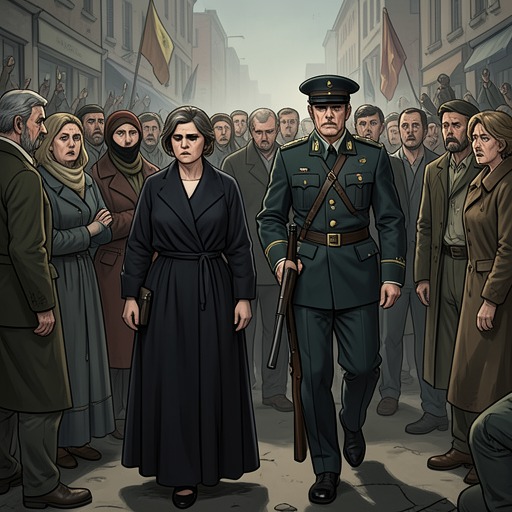
When Royal Ulster Constabulary officers arrived at the house at six in the morning to arrest Dolours on suspicion of belonging to an illegal organisation, Chrissie insisted that her daughter would not leave before breakfast. The officers agreed to wait. Chrissie then told Dolours to put on makeup, buying time for her to collect herself. She put on a fur coat normally reserved for special occasions and announced that she would accompany her daughter. At Castlereagh police station, Dolours answered questions with the same refusal to cooperate, saying only that she had nothing to say. She was released without charge, and before leaving, Chrissie paused to admire the mug shot and asked whether she could keep it.
The scene catches the mixture of composure, affection and defiance in Chrissie’s response. Her intervention did not prevent the arrest or dissolve its danger; it gave Dolours time and ensured she would not face the journey to the station alone. At home, care also took quieter forms. After operations, Chrissie would silently take Dolours’s clothes and put them in the washing machine, asking no questions. But the silence could not insulate her from fear: once, after news of a bomb reached her, she wept, frightened that it might have killed her daughter.
Chrissie understood the stakes and tried, at least once, to persuade Dolours to finish her education. When she asked, “Would you not finish your education?” Dolours replied, “Like the revolution’s going to wait until I finish my education.” The exchange sets a mother’s concern for her daughter’s future against Dolours’s conviction that political action could not be postponed. Chrissie’s question registers apprehension, not indifference; her care did not depend on believing that her daughter’s decision was safe.
The hunger strike and its cost
After their conviction at Winchester Castle, Dolours and Marian announced that they would refuse food until they received political-prisoner status and were returned to Northern Ireland to serve their sentences. They were sent to Brixton Prison, where they were the only women in an overcrowded, overwhelmingly male institution. Their demand and the conditions of their confinement made the strike a sustained confrontation with the British government, while Chrissie watched her daughters put their bodies at risk.
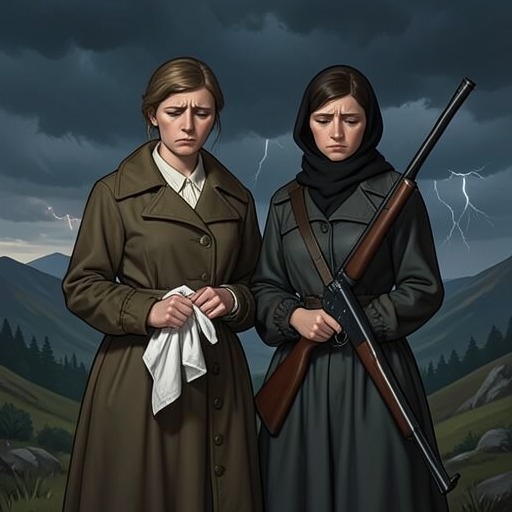
Chrissie did not urge them to stop. Albert Price told a reporter that if his daughters died, “at least they will have done something.” Chrissie’s own public position was similarly resolute: “I raised them to do their duty to their country,” she said. “I am heartbroken looking at them suffering, yet I am proud of them. I will not ask them to give up. I know they will win in the end.” The words hold grief and pride together. Her refusal to ask them to yield was not a claim that their suffering was bearable; she named herself heartbroken even while affirming the principle by which they understood their actions.
During visits to the prison, she kept up animated conversation about everything except the hunger strike until the visit was nearly over. Then, as she was about to leave, she asked what the sisters were taking. Dolours told her they were drinking only water. Chrissie answered, “Well, drink plenty of water.” The smallness of the exchange is its force: faced with a decision she would not overturn, she offered the care still available to her. By then, Dolours had also endured force-feeding after more than two weeks without food. The episode exposed the bodily violence of the prison’s response, but Chrissie’s visit is described through the restrained, ordinary language of a mother’s final practical advice.
Death before the return
Chrissie died of pancreatic cancer four days after the funeral of her sister, Bridie Dolan. By the time Dolours and Marian disembarked in Northern Ireland, they were overjoyed to be home but distressed that they had arrived too late. They had petitioned for compassionate leave to attend their mother’s funeral and been refused. Instead, they sent a wreath of Easter lilies. Four hundred people joined the cortège from Slievegallion Drive to Milltown Cemetery; Albert walked beside the coffin with his head bowed, and a young girl in a black IRA beret and dark glasses led the procession, playing bagpipes.
The sisters’ return, which Chrissie had insisted would come one way or another, did not restore the family they had left behind. Her support had accompanied them through arrest, imprisonment and the hunger strike, but neither her conviction nor their eventual return could undo the missed farewell. The Easter lilies at her funeral also recalled the emblem for which Chrissie and her sisters had once been imprisoned: a family history carried forward into a parting she could not witness.